
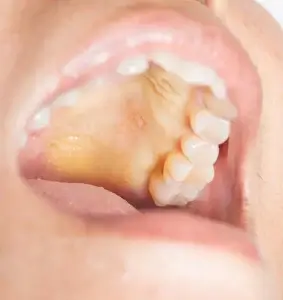
Quick Summary
- A yellow roof of the mouth is usually harmless — dehydration, tobacco staining, or plaque buildup are the most common culprits.
- Creamy yellow-white patches that wipe away and leave a sore, red surface often point to oral thrush, a yeast infection.
- Yellowing paired with yellow eyes, dark urine, or fatigue can signal jaundice, which needs prompt medical attention.
- Most cases clear up within a week or two with better hydration and oral hygiene.
- See a doctor or dentist if the discoloration lasts more than two weeks, comes with pain, fever, or difficulty swallowing, or if you notice patches that won’t wipe off.
Waking up and catching a glimpse of a yellowish roof of your mouth in the mirror can be unsettling, especially when you’re not sure what’s causing it. The good news? In most people, it’s nothing more serious than dry mouth, leftover turmeric from last night’s dinner, or a bit of plaque buildup near the palate. But in some cases, a yellow palate is your body’s way of flagging something that needs attention — from a yeast infection to a liver problem. This guide walks through the common and less common causes, how to tell them apart, and when it’s time to book an appointment with a doctor or dentist.
What Does a Yellow Roof of the Mouth Mean?
The roof of your mouth, known medically as the palate, is normally a healthy pink. It has two parts: the hard palate toward the front (the bony area behind your front teeth) and the soft palate toward the back (the fleshier part near your throat). When either area turns yellow, the change can come from two very different places — the surface of the tissue, or the tissue itself.
Surface-level yellowing is usually staining: food pigments, tobacco residue, or a film of bacteria and dead cells sitting on top of otherwise normal tissue. Tissue-level yellowing is different — it happens when there’s inflammation, infection, or a buildup of a pigment like bilirubin underneath the surface. A dental clinic in Perth notes that the look alone doesn’t always reveal the cause, since surface coatings and deeper tissue changes can appear similar. That’s exactly why it helps to know what else is going on in your mouth and body before jumping to conclusions.
Common Causes of a Yellow Roof of Mouth
1. Dehydration and Dry Mouth
Saliva does more than keep your mouth comfortable — it actively washes away bacteria and food debris. When saliva production drops, whether from not drinking enough water, breathing through your mouth at night, or a medical condition, bacteria get a chance to build up and dull the tissue’s color. This condition is called xerostomia, and it often comes with a sticky feeling, bad breath, and a dry throat alongside the yellow tinge.
2. Plaque, Tartar, and Poor Oral Hygiene
Skipping brushing or flossing lets bacteria colonize the mouth, including the palate. As bacterial film accumulates, it can tint the roof of the mouth and tongue a pale yellow. This is one of the most reversible causes — a thorough cleaning routine, plus a professional dental cleaning if needed, usually resolves it within days.
3. Tobacco and Smoking
Nicotine and tar cling to oral tissue and are notorious for yellow-brown staining, not just on teeth but across the palate too. Smoking also dries out the mouth and disrupts its natural bacterial balance, which compounds the discoloration. Quitting is the single most effective step for reversing tobacco-related staining and lowering the risk of more serious oral conditions down the line.
4. Food and Drink Staining
Turmeric-heavy dishes (a staple in South Asian cooking), strong tea, coffee, and brightly colored candies can all leave a temporary yellow tint on the palate. This type of staining is harmless and typically fades within a day or two of regular brushing.
5. Oral Thrush (Oral Candidiasis)
Oral thrush is a yeast infection caused by an overgrowth of the fungus Candida albicans, which normally lives in the mouth in small, harmless amounts. According to the Mayo Clinic, oral thrush develops when this fungus overgrows in the mouth, and it typically produces creamy white or yellow patches on the tongue and inner cheeks, which can spread to the roof of the mouth, gums, tonsils, or the back of the throat. It’s more common in babies, older adults, people with weakened immune systems, and those who’ve recently taken antibiotics or used steroid inhalers. A telltale sign: thrush patches often wipe away, leaving a sore, red surface underneath — something food stains or plaque won’t do.
6. Canker Sores (Aphthous Ulcers)
These small, painful ulcers can appear yellow or white with a red border around them. They’re common on the inner cheeks, tongue, and occasionally the roof of the mouth. The exact cause isn’t fully understood, but triggers may include minor mouth injuries, stress, hormonal shifts, or deficiencies in nutrients like vitamin B12 or zinc. Most heal on their own within one to two weeks.
7. Medications, Especially Bismuth-Containing Ones
Bismuth subsalicylate, the active ingredient in some over-the-counter stomach remedies, can react with sulfur compounds in the mouth and produce a temporary black or yellow discoloration on the tongue and palate. Certain antibiotics and iron supplements have also been linked to similar oral color changes as a side effect. If discoloration starts right after beginning a new medication, mention it to your pharmacist or doctor.
8. Thermal Burns (“Pizza Palate”)
Biting into food that’s too hot can scald the roof of the mouth, and as that burn heals, the tissue often looks yellow-white for several days. This is a normal part of healing rather than a cause for alarm, though it’s worth avoiding further irritation while it recovers.
9. Fordyce Granules
These are small, painless yellowish spots that form when sebaceous (oil-producing) glands sit just under the surface of the oral tissue. They’re a normal anatomical variation, not a disease, and require no treatment.
When a Yellow Palate Signals Something More Serious
Jaundice
Jaundice happens when bilirubin — a yellow pigment created as red blood cells break down — builds up faster than the liver can clear it. Cleveland Clinic explains that jaundice causes the skin, the whites of the eyes, and the inside of the nose and mouth to turn yellow, and conditions like hepatitis, gallstones, and tumors can trigger it. Beyond the mouth and eyes, jaundice can bring on belly pain, flu-like symptoms, dark urine, pale stools, fatigue or confusion, itchy skin, and weight loss. Because jaundice usually points to a liver, gallbladder, or blood disorder, it always warrants a medical evaluation rather than home treatment.
Strep Throat and Pharyngitis
Bacterial throat infections like strep throat can cause a buildup of pus and bacteria that tints the roof of the mouth and tonsils yellow. This usually comes with a sore, scratchy throat, pain swallowing, and sometimes fever — a combination that’s worth seeing a doctor about, since strep throat is typically treated with antibiotics.
Leukoplakia
Leukoplakia causes thickened white or yellowish-white patches inside the mouth that can’t be wiped away. It’s generally linked to chronic irritation from tobacco or alcohol use, and while most patches are benign, a small percentage can become precancerous over time. Any persistent patch on the palate that doesn’t resolve within a couple of weeks should be checked by a dentist or doctor.
Oral Herpes (HSV-1)
The herpes simplex virus can produce sores that appear yellow, filled with pus, sometimes accompanied by tingling or itching before an outbreak. The World Health Organization notes that oral herpes commonly causes cold sores or open sores in or around the mouth or lips. These outbreaks are usually self-limited, though antiviral medication can help shorten symptoms.
Yellow Roof of Mouth: Common Causes at a Glance
| Cause | Typical Appearance | Other Symptoms | Needs a Doctor? |
| Dehydration / dry mouth | Dull yellow film | Bad breath, sticky saliva | Usually not, unless persistent |
| Plaque buildup | Pale yellow coating | Bad breath, swollen gums | Dental cleaning recommended |
| Tobacco staining | Yellow-brown tint | Stained teeth, bad breath | For cessation support |
| Oral thrush | Creamy yellow-white patches | Burning, loss of taste, cracked lip corners | Yes |
| Canker sores | Small yellow-white ulcers with red border | Pain while eating | Only if unhealed after 2–3 weeks |
| Jaundice | Diffuse yellow tint, also in eyes/skin | Dark urine, fatigue, belly pain | Yes, promptly |
| Strep throat | Yellow patches near throat/tonsils | Sore throat, fever, pain swallowing | Yes |
| Leukoplakia | Yellow-white patch, won’t wipe off | Usually painless | Yes |
Symptoms That Should Prompt a Doctor’s Visit

- Yellow discoloration lasting longer than one to two weeks despite better hydration and hygiene
- Pain, swelling, or difficulty swallowing or speaking
- Patches that don’t wipe away, or that bleed easily
- Fever or a worsening sore throat
- Yellowing of the eyes or skin, dark-colored urine, or unusual fatigue
- Any lesion that keeps recurring in the same spot
Physicians generally recommend that persistent or unexplained oral changes be evaluated in person rather than self-diagnosed from photos, since several conditions can look nearly identical in the mouth.
Home Care Tips for Mild Cases
- Stay hydrated. Aim for consistent water intake throughout the day to keep saliva flowing normally.
- Brush and floss twice daily, and consider a soft tongue scraper to reduce bacterial buildup near the palate.
- Use a gentle saltwater rinse to soothe irritation and reduce bacteria.
- Cut back on tobacco and alcohol-based mouthwashes, both of which can dry out and irritate oral tissue.
- Watch your diet for a few days if you suspect staining from turmeric, tea, coffee, or dyed candies.
- Avoid re-injuring a healing burn from hot food — stick to soft, cool foods until it settles.
None of these steps replace a proper diagnosis if the discoloration is severe, painful, or doesn’t improve.
Frequently Asked Questions
Is a yellow roof of mouth always a sign of jaundice?
No. Jaundice is one of many possible causes, but it’s far less common than simple dehydration, staining, or oral thrush. Jaundice is usually accompanied by yellowing of the eyes and skin, dark urine, and fatigue — if those aren’t present, another cause is more likely.
Can dehydration really change the color of my mouth?
Yes. Reduced saliva flow lets bacteria and dead cells accumulate on oral tissue, which can create a dull yellow appearance. Drinking more water and treating any underlying dry-mouth condition usually resolves it within a few days.
How do I know if it’s oral thrush and not just staining?
Thrush typically looks like creamy white-to-yellow patches that can be gently wiped off, leaving a sore, red surface underneath. Staining from food, tea, or tobacco doesn’t wipe away as easily and usually isn’t painful.
Should I be worried if the yellow patch doesn’t hurt?
Painless patches aren’t automatically safe to ignore. Leukoplakia, for example, is usually painless but still needs evaluation, since a small number of cases can develop into something more serious over time.
Can children get a yellow roof of mouth?
Yes, especially from oral thrush, which is more common in babies and young children due to their developing immune systems, or from mouth breathing and dehydration. A pediatrician or dentist can confirm the cause.
What home remedies actually help?
Staying hydrated, practicing good oral hygiene, and using a saltwater rinse can ease mild irritation and staining. However, home remedies won’t resolve infections like thrush or strep throat, which typically need prescription treatment.
When should I stop waiting and see a doctor?
If the discoloration persists beyond two weeks, is painful, comes with fever or trouble swallowing, or is paired with yellow eyes or skin, it’s time to get checked rather than continue home care.
Medical Disclaimer: This article is intended for general informational purposes only and does not constitute medical advice. It is not a substitute for professional diagnosis or treatment. If you notice persistent or concerning changes in the roof of your mouth, please consult a licensed doctor or dentist for an accurate evaluation
