

That scratchy, raw feeling at the back of your throat ruins everything. Your morning coffee. A good night’s sleep. Even talking starts to feel like work. So you reach for tea, because that’s what people have always done when a throat starts hurting — and as it happens, the instinct holds up. Warm liquids soothe irritated tissue, certain herbs bring genuine anti-inflammatory compounds along for the ride, and honey has one of the stronger evidence bases of any home remedy out there for throat and cough symptoms. Below is a rundown of which teas are actually worth brewing, where the research is solid and where it’s thinner than the marketing suggests, how to prepare them properly, and when it’s time to put the teapot down and call a doctor.
Quick Summary
- Chamomile, ginger, peppermint, and green tea are the most commonly recommended options, each working through slightly different mechanisms — anti-inflammatory compounds, menthol’s numbing effect, or antioxidant catechins.
- Honey has the strongest research backing of any single ingredient for throat and cough relief and pairs well with almost any tea.
- Licorice root has real clinical evidence, though most of it comes from surgical settings and gargling rather than everyday tea drinking.
- A sore throat lasting more than a week, or one paired with high fever, difficulty swallowing, or a rash, needs medical evaluation rather than more tea.
Why Warm Tea Helps a Sore Throat in the First Place
Here’s what’s actually happening when you sip something warm: the Mayo Clinic notes that warm liquids can help soothe a sore throat, largely because heat and moisture keep the throat lining hydrated and cut down on the dry, scratchy sensation that makes swallowing uncomfortable. Tea is also a convenient carrier for other soothing ingredients — honey especially, which most sore-throat remedies circle back to eventually.
One thing most tea blogs won’t tell you: for a lot of herbal teas, the clinical evidence is thinner than the marketing suggests. A compound looking promising in a petri dish is not the same as it working in a cup of tea you drink at home. These teas aren’t useless. But the honest answer, most of the time, is “probably helpful, almost certainly safe, definitely not a cure.”
The Best Teas for Sore Throat Relief
Chamomile Tea
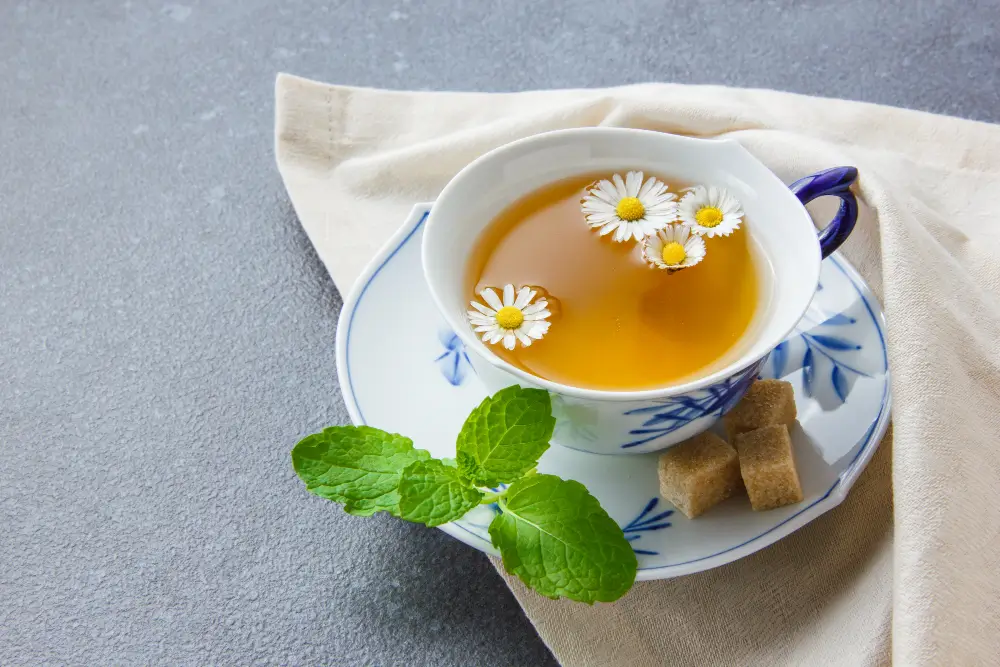
Chamomile tea is probably the most recommended sore-throat tea out there, and it earns the reputation honestly. It contains apigenin and chamazulene, two compounds shown to have anti-inflammatory activity in laboratory research. A review in Molecular Medicine Reports found that chamomile extract may help soothe throat tissue and ease hoarseness tied to a cold. Worth knowing, though: a controlled trial testing chamomile spray against a placebo for post-surgical sore throat found no statistically significant difference between the two groups. Traditional use and lab findings don’t always survive contact with a rigorous clinical trial. Chamomile’s real advantage might just be simpler than any of that — it’s caffeine-free and calming, which makes it a solid choice in the evening when a sore throat is wrecking your sleep.
How to brew: Steep 1–2 teaspoons of dried chamomile flowers (or one tea bag) in freshly boiled water for 5–10 minutes, covered, to retain the volatile oils. Add honey once the tea has cooled slightly.
Ginger Tea
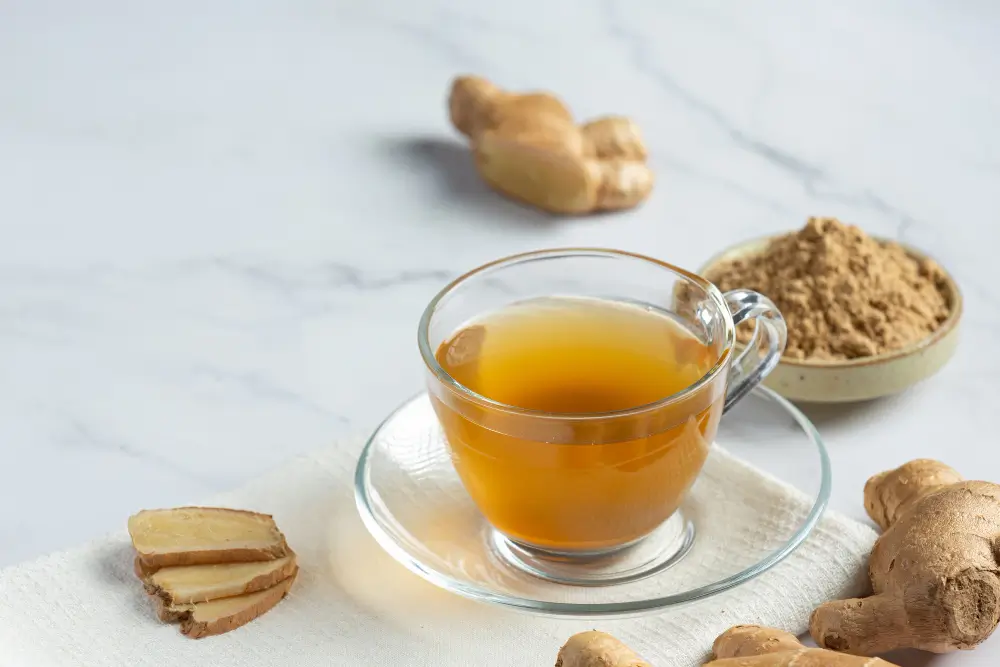
Ginger tea reputation isn’t just folklore. Gingerols, the active compounds in fresh ginger, have documented anti-inflammatory and antioxidant properties, and plenty of clinicians recommend ginger tea for throat irritation tied to colds or postnasal drip. Part of why it works: the warmth and slight spiciness stimulate saliva production, keeping the throat moist. It’s a good everyday pick, especially if you’re also dealing with nausea or congestion — ginger has separate evidence for calming an upset stomach too.
How to brew: Simmer a few thin slices of fresh ginger root in water for 10 minutes, strain, and add honey and a squeeze of lemon.
Peppermint Tea
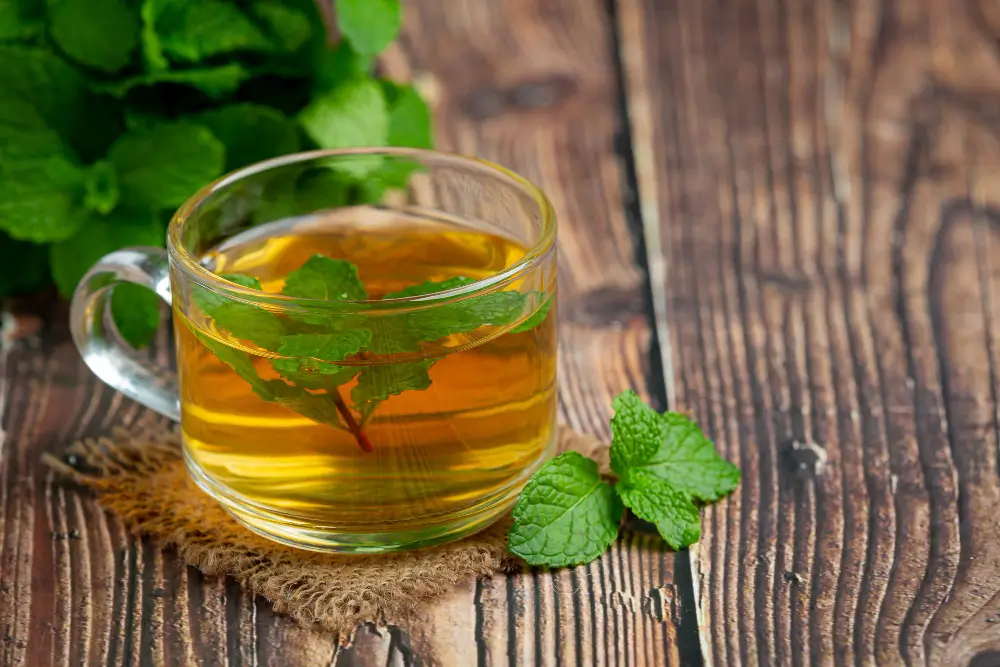
Peppermint tea menthol content produces a cooling, mildly numbing sensation the moment it hits your throat — the same reason menthol shows up in nearly every over-the-counter lozenge on the shelf. It also has mild antimicrobial properties and can help thin mucus, which makes it especially useful when a sore throat comes bundled with sinus congestion. And since it’s naturally caffeine-free, there’s no bad time of day to drink it.
How to brew: Steep 1 tablespoon of dried peppermint leaves (or one tea bag) for 5–7 minutes. Peppermint tea is often enjoyed without added sweeteners, though honey works well if the throat is particularly raw.
Green Tea
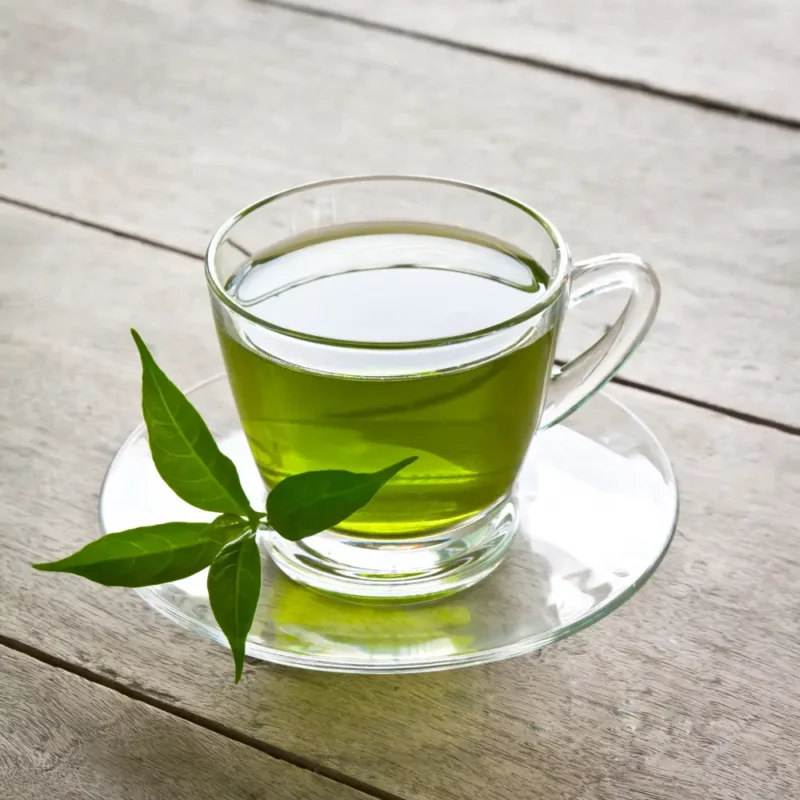
Green tea‘s contribution is catechins — antioxidant compounds with documented antiviral and anti-inflammatory activity. It’s not usually the first tea people reach for with a sore throat specifically, but its catechin content gives it a decent evidence base for general immune and antioxidant support while you’re fighting off a cold. It does contain caffeine, so it’s better suited to daytime, and some people find it too astringent on an already-raw throat unless it’s brewed light.
How to brew: Steep in water just below boiling (around 175–185°F) for 2–3 minutes to avoid excessive bitterness, which can be more irritating on a sore throat.
Licorice Root Tea
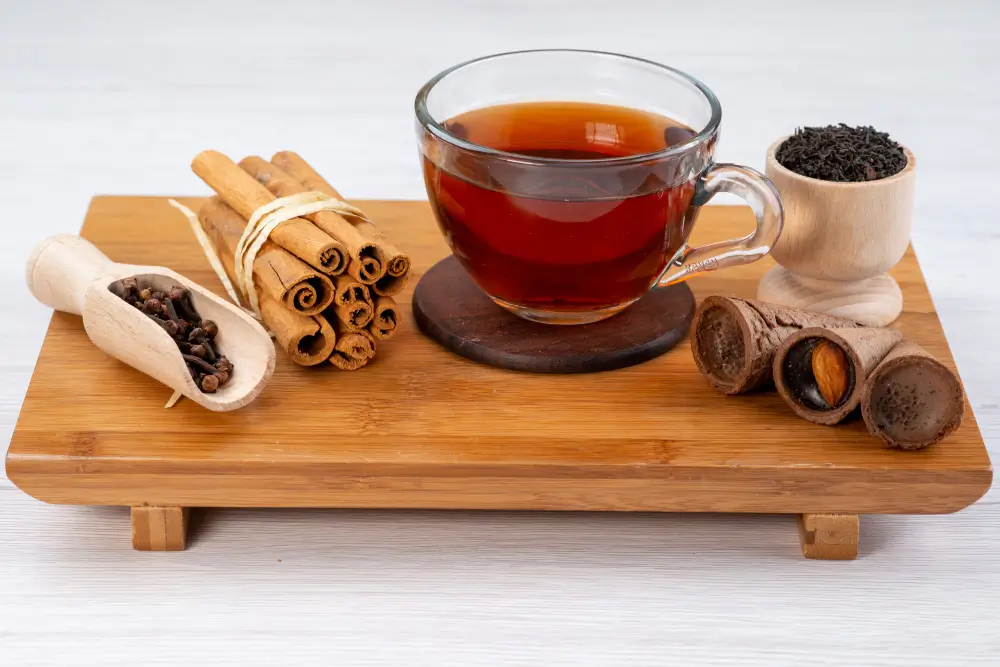
Licorice tea has a genuinely interesting evidence base — just not quite the one you’d expect from a tea. Most of the research comes from surgical and gargling studies, not people drinking a cup at home. A systematic review and meta-analysis in the Journal of Clinical Anesthesia found that topical licorice, used as a gargle before surgery, significantly reduced the incidence and severity of postoperative sore throat compared with non-analgesic controls.
A separate randomized trial backed that up, finding that gargling with a licorice solution before anesthesia meaningfully lowered post-surgical throat pain. None of this proves brewed licorice tea does the same thing for a run-of-the-mill cold, since gargling delivers far more concentrated contact with throat tissue than sipping does. Still, it points to real anti-inflammatory activity relevant to throat pain. One caution worth taking seriously: licorice root contains glycyrrhizin, which can raise blood pressure and deplete potassium with regular, prolonged use. Use it sparingly, especially if you have hypertension, and skip it during pregnancy.
How to brew: Steep 1 teaspoon of dried licorice root in hot water for 5–10 minutes. Limit use to a few days rather than as a daily habit.
Marshmallow Root and Slippery Elm Tea
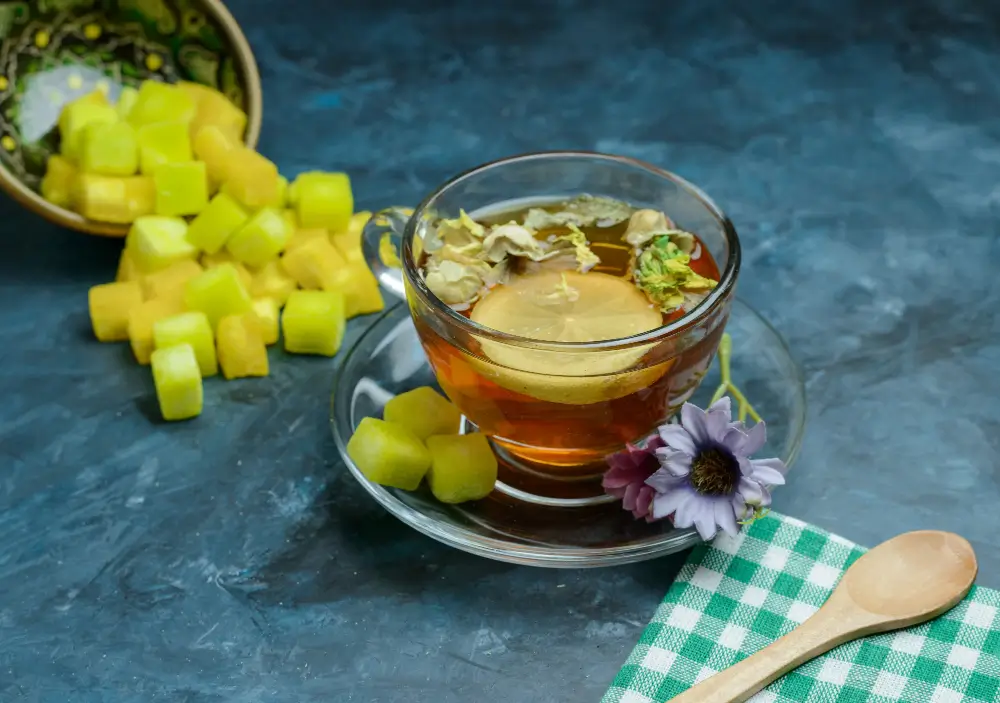
Both of these are demulcents — Elm tea a fancy way of saying they contain mucilage that physically coats and soothes irritated mucous membranes on contact. You won’t find them on every store shelf, but they’re worth seeking out precisely because the mechanism is so straightforward. No complicated anti-inflammatory pathway to untangle, just a coating effect.
Turmeric Tea
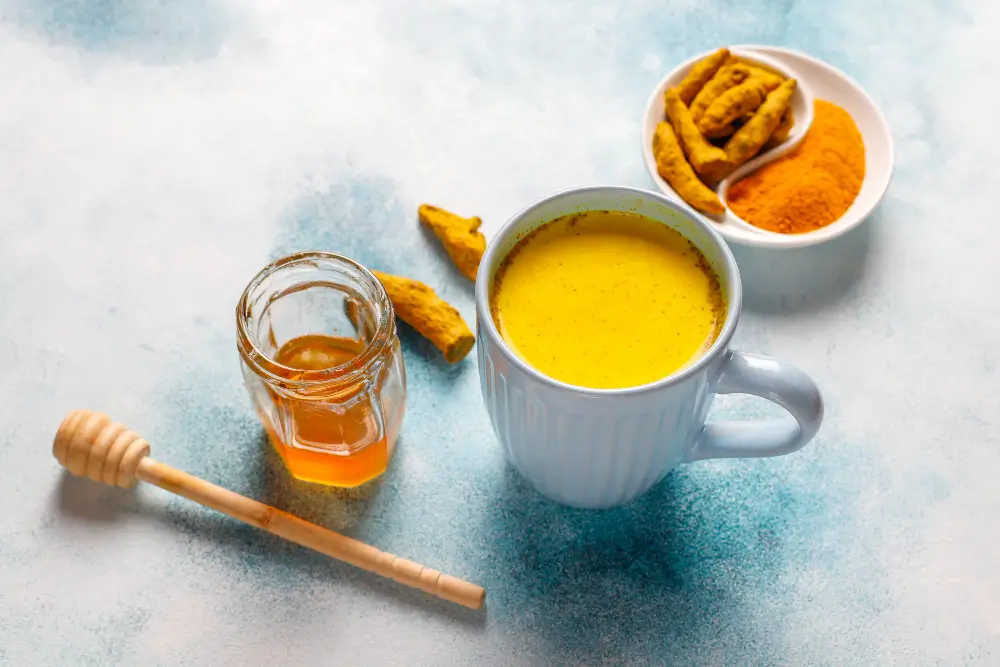
Curcumin, turmeric tea active compound, has well-documented anti-inflammatory properties. The catch is absorption: a plain cup of turmeric tea doesn’t deliver much of it unless you add black pepper, which contains piperine and noticeably boosts how much curcumin your body actually absorbs. A pinch of black pepper and a spoon of honey turns it into a reasonable addition to a sore-throat routine — and in South Asian households, it’s already a familiar one.
Salt Water — Not a Tea, But Worth Mentioning
It’s not tea, but no sore-throat guide is really complete without it. Gargling warm salt water is one of the simplest, most evidence-supported home remedies going for reducing throat swelling and clearing mucus. Half a teaspoon of salt in a full glass of warm water, gargled every few hours, pairs well alongside anything on this list.
Why Honey Belongs in Almost Every Cup
If there’s one ingredient with genuinely strong research behind it, it’s honey — not one of the herbs. A 2018 Cochrane review found that honey probably reduces cough duration better than placebo, though the evidence quality was noted as variable and most trial participants were only tracked for a single night.
A separate 2014 Cochrane analysis of 568 children found honey may work better than no treatment or placebo for cutting down cough frequency, and possibly better than the antihistamine diphenhydramine — though it landed about the same as dextromethorphan. A more recent 2023 systematic review, drawing on studies published after the original Cochrane analysis, arrived at broadly similar conclusions about honey and children’s acute cough.
Mayo Clinic itself points out that tea or warm lemon water mixed with honey is a common, reasonable way to soothe a sore throat. The general advice: stir in a teaspoon or two once your tea has cooled slightly — very hot liquid can destroy some of honey’s beneficial enzymes — and never give honey to a child under one year old, because of the risk of infant botulism.
Comparison Table: Sore Throat Teas at a Glance
| Tea | Best For | Key Compound | Evidence Strength | Caution |
| Chamomile | Evening use, sleep support | Apigenin, chamazulene | Moderate (mostly lab-based) | Generally safe |
| Ginger | Congestion, nausea | Gingerol | Moderate | Can worsen acid reflux in some people |
| Peppermint | Sinus congestion, numbing relief | Menthol | Moderate | Avoid if you have acid reflux |
| Green Tea | Daytime, general antioxidant support | Catechins | Moderate | Contains caffeine |
| Licorice Root | Short-term, intense throat pain | Glycyrrhizin | Stronger (gargle/surgical studies) | Avoid with high blood pressure or pregnancy |
| Turmeric | Anti-inflammatory support | Curcumin | Limited without piperine | Generally safe in food amounts |
How to Brew Sore Throat Tea for Maximum Relief
- Use freshly boiled water, but let it cool for 1–2 minutes before pouring over delicate herbs like chamomile or peppermint to avoid destroying their beneficial compounds.
- Steep for the full recommended time — under-steeping means fewer active compounds make it into your cup.
- Add honey once the tea has cooled slightly, not while it’s still boiling hot.
- Add lemon for a small vitamin C boost and a more palatable, less “medicinal” taste.
- Sip slowly rather than gulping — slow sipping keeps the warm liquid in contact with the throat longer.
What to Avoid When Your Throat Is Sore
- Very hot beverages that can further irritate already inflamed tissue
- Excess caffeine, which can be dehydrating
- Alcohol, which dries out and irritates the throat lining
- Overly acidic or spicy additions if your throat is very raw
When to See a Doctor
Tea and home remedies genuinely help with the common, viral sore throats that come along with colds. What they can’t do is stand in for medical evaluation when the symptoms point to something more serious — strep throat, tonsillitis, that sort of thing. Physicians generally recommend seeking care if you notice:
- A sore throat lasting longer than 5–7 days
- A fever above 101°F (38.3°C)
- Difficulty breathing or swallowing
- White patches or pus visible on the tonsils
- A rash accompanying the sore throat
- Swollen, tender lymph nodes in the neck
- Severe pain that doesn’t improve with home care
If any of these apply to you, use the My Health Chart Symptom Checker to help understand next steps, or book a consultation with a PMDC-verified doctor through the My Health Chart Doctor Directory rather than continuing to self-treat.
Frequently Asked Questions
1: What is the best tea for a sore throat?
Chamomile and ginger tea are among the most commonly recommended, each offering anti-inflammatory compounds along with the general soothing effect of warm liquid. Adding honey to any tea boosts its effectiveness, since honey has some of the strongest research support of any single home remedy for throat and cough relief.
2: Does honey and lemon tea actually work for sore throat?
Yes, to a meaningful degree. Honey has research support for reducing cough frequency and severity, and warm liquids generally soothe throat irritation. Lemon adds a small amount of vitamin C and can make the tea more palatable, though it isn’t the primary active ingredient.
3: Can I drink tea with a fever and sore throat?
Yes, warm tea is generally safe and can help with hydration, which is especially important during a fever. However, a sore throat paired with a fever above 101°F (38.3°C), especially one lasting more than a couple of days, warrants medical evaluation rather than relying on tea alone.
4: Is green tea good for a sore throat?
Green tea contains catechins with antioxidant and antiviral properties that may offer some general immune support during a cold. It’s not typically the strongest option specifically for throat pain compared with chamomile or ginger, and its caffeine content and astringency can be less comfortable on a very raw throat.
5: How many cups of tea should I drink for a sore throat?
Two to four cups a day is a reasonable range for most herbal teas like chamomile, ginger, or peppermint. Licorice root tea should be limited to short-term use of just a few days due to its effects on blood pressure and potassium levels with prolonged consumption.
6: Can children drink sore throat tea?
Mild herbal teas like chamomile can generally be given to children in small amounts, but honey should never be given to infants under one year old due to the risk of infant botulism. Parents should check with a pediatrician before giving herbal teas to very young children.
7: Is it better to drink tea or gargle for a sore throat?
Both approaches have merit and work well together. Drinking tea provides overall hydration and systemic soothing, while gargling (whether with warm salt water or cooled licorice tea) delivers more concentrated, direct contact with irritated throat tissue.
8: What should I avoid drinking with a sore throat?
Avoid alcohol, very hot beverages, and excessive caffeine, all of which can dehydrate or further irritate the throat lining. Highly acidic or carbonated drinks can also aggravate discomfort in a very raw throat.
This article is for general informational purposes only and is not a substitute for professional medical advice, diagnosis, or treatment. Always consult a qualified physician regarding a sore throat that is severe, persistent, or accompanied by other concerning symptoms.

Mackenzie Burgess is a Culinary + Media Dietitian based in Los Angeles, specializing in practical, approachable nutrition and cooking education. Through Cheerful Choices, she helps people build kitchen confidence with healthy recipes, cooking hacks, and flexible ingredient choices.