

Quick answer: A lump on the roof of the mouth (palate) is most often caused by a harmless bony growth called a torus palatinus, a swollen salivary gland, a canker sore, or minor trauma from hot food or biting. Most lumps are painless and go away on their own within one to two weeks. See a doctor if the lump is hard, growing, bleeding, lasts longer than two weeks, or comes with numbness, difficulty swallowing, or unexplained weight loss.
What Is the Roof of the Mouth Called?
The roof of the mouth is called the palate. It has two parts: the hard palate (the bony front section) and the soft palate (the fleshy back section near the throat). Lumps can form on either part, and the cause often depends on location.
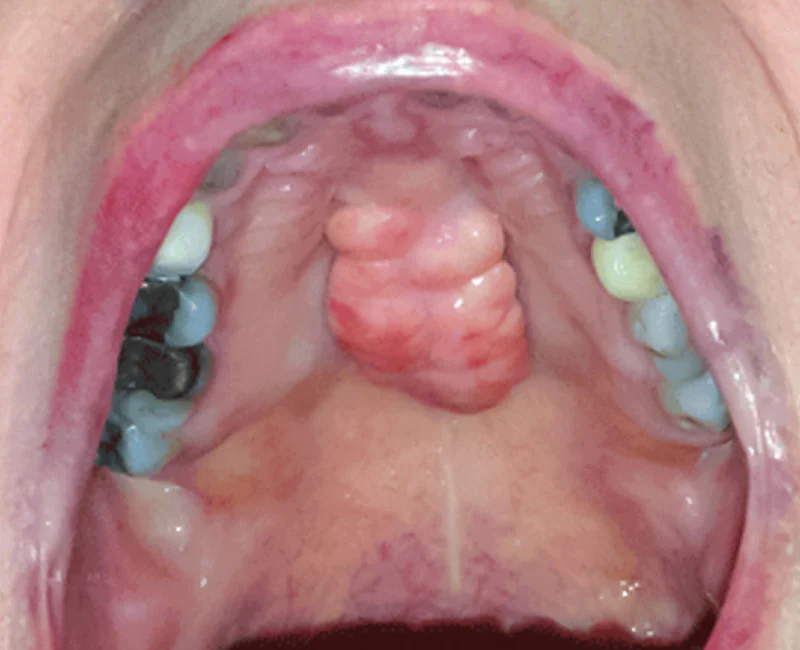
Common Causes of a Lump on the Roof of the Mouth
1. Torus Palatinus (Bony Growth)
This is the most common cause of a hard, bony bump in the middle of the hard palate. It’s a normal variation of bone growth, not a tumor, and tends to grow slowly over years. It’s painless and usually only needs removal if it interferes with dentures or eating.
2. Canker Sore (Aphthous Ulcer)
A small, painful, white or yellow sore with a red border. Canker sores are not contagious and usually heal within 7–14 days. Stress, acidic foods, and minor mouth injuries can trigger them.
3. Mucocele (Mucous Cyst)
A soft, fluid-filled bump that forms when a salivary gland duct gets blocked or injured, often from biting the area. It’s usually painless and may come and go.
4. Burns or Trauma
Eating very hot food or drinks, or accidentally biting or scratching the palate with sharp food (chips, popcorn, bones), can cause swelling, blistering, or a tender bump that heals within days.
5. Oral Thrush (Candidiasis)
A yeast infection that causes creamy white or red patches, sometimes raised, on the palate. It’s more common in babies, denture wearers, people with weakened immune systems, or after antibiotic use.
6. Salivary Gland Stone or Infection
Blocked salivary glands can cause a tender swelling, especially near meals when saliva flow increases.
7. Fibroma
A small, smooth, firm, painless bump caused by repeated irritation, such as from a denture edge or chewing habit.
8. Allergic Reaction
Certain foods, medications, or dental products can trigger localized swelling or small bumps on the palate.
9. Oral Cancer (Less Common but Important)
Rarely, a persistent lump that’s hard, doesn’t heal, bleeds, or is accompanied by numbness or difficulty swallowing can be a sign of oral cancer. This is uncommon but is the reason persistent lumps should always be checked.
When Should You See a Doctor or Dentist?
Seek a professional evaluation if the lump:
- Lasts longer than 2 weeks without improving
- Is hard, fixed, or rapidly growing
- Bleeds or causes persistent pain
- Comes with numbness, trouble swallowing, or a change in voice
- Is accompanied by unexplained weight loss
- Keeps recurring in the same spot
A dentist or doctor can usually diagnose the cause with a simple visual exam, and may order a biopsy if anything looks unusual — this is a routine precaution, not a sign of a serious diagnosis.
How Is a Mouth Lump Treated?
| Cause | Typical Treatment |
|---|---|
| Torus palatinus | No treatment needed unless it interferes with dentures |
| Canker sore | Saltwater rinses, topical gels, avoiding acidic foods |
| Mucocele | Often resolves on its own; minor surgery if persistent |
| Burns/trauma | Healing on its own within days; cool rinses for comfort |
| Oral thrush | Antifungal medication |
| Fibroma | Minor surgical removal if bothersome |
Frequently Asked Questions
Is a lump on the roof of my mouth always serious? No. The vast majority of palate lumps are benign conditions like a torus palatinus, canker sore, or minor injury that resolve without treatment.
How do I know if my mouth lump is cancerous? Warning signs include a lump that is hard, doesn’t heal within 2–3 weeks, bleeds, or is paired with numbness or difficulty swallowing. Only a doctor or dentist can confirm a diagnosis, typically with a biopsy.
Can stress cause a lump on the roof of my mouth? Yes — stress is a known trigger for canker sores, which can appear on the palate as small, painful sores.
Should I pop a bump on the roof of my mouth? No. Avoid popping or picking at any oral bump, as this increases infection risk. Let it heal naturally or have it evaluated.
This article is for educational purposes only and is not a substitute for professional medical advice. If you have concerns about a lump in your mouth, consult a dentist or doctor for an accurate diagnosis.
