
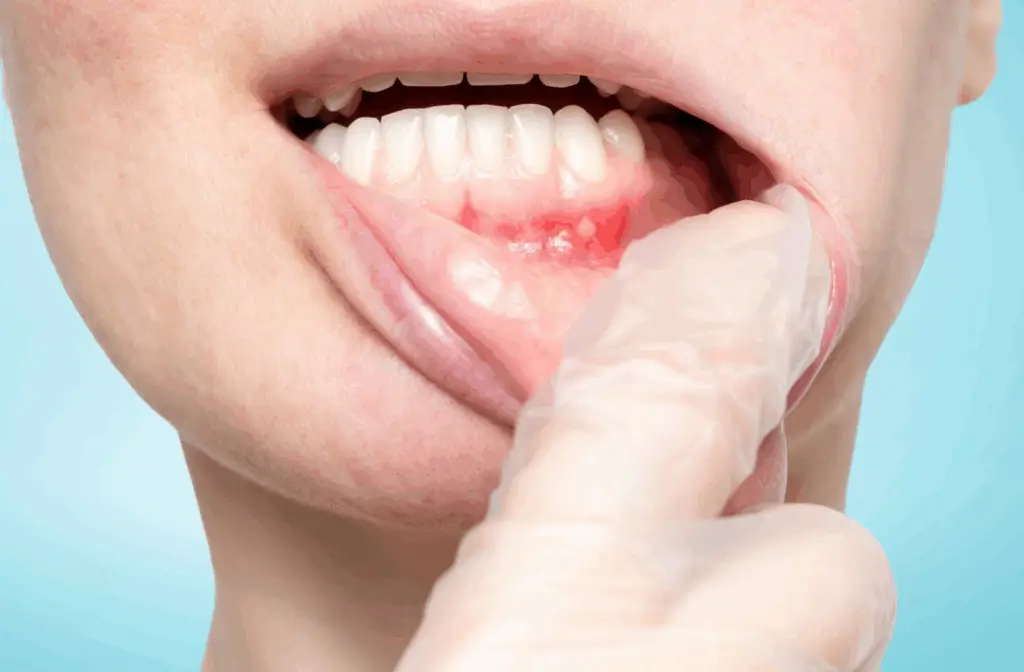
You’re brushing your teeth, you glance in the mirror, and there it is — a small white patch on your gum that definitely wasn’t there last week. Most people’s first instinct is to panic and assume the worst. Usually that’s not necessary. White spots on gums show up for a lot of reasons, and most of them are minor and treatable.
Still, a few causes are worth taking seriously, which is exactly why it helps to know the difference. This article walks through the common causes, what the spots tend to look like depending on the cause, home care that can help, and — more importantly — the signs that mean it’s time to stop guessing and see a dentist or doctor.
Quick Summary: Key Takeaways
- White spots on gums are commonly caused by canker sores, oral thrush, leukoplakia, or minor trauma from brushing too hard.
- Most cases clear up on their own or with simple treatment within one to two weeks.
- Persistent, painless white patches that don’t heal should be checked by a dentist, since leukoplakia can occasionally be precancerous.
- Oral thrush is more common in people with weakened immune systems, infants, denture wearers, and those on certain inhaled medications.
- Good oral hygiene and avoiding tobacco lower the risk of several causes.
- Any white spot lasting more than two weeks, or one accompanied by pain, bleeding, or difficulty swallowing, needs professional evaluation.
Common Causes of White Spots on Gums
There isn’t one single explanation here — the cause usually shows itself through how the spot looks, feels, and how long it sticks around.
Canker Sores (Aphthous Ulcers)
These are small, shallow ulcers with a white or yellowish center and a red border. According to the myhealthchart, canker sores aren’t contagious and tend to appear on soft tissue in the roof of mouth, including the gums near the base of the teeth. They’re often triggered by minor injury, stress, certain foods, or hormonal changes, and they typically heal within one to two weeks without treatment.
Oral Thrush (Candidiasis)
Oral thrush is a fungal infection caused by an overgrowth of Candida albicans, a yeast that normally lives in the mouth in small amounts. The Centers for Disease Control and Prevention (CDC) notes that thrush appears as creamy white lesions, often on the tongue and inner cheeks but sometimes on the gums, and can be scraped off — usually leaving a red, sometimes bleeding, surface underneath.
Thrush is more likely in:
- Infants and older adults
- People with weakened immune systems, including those with uncontrolled diabetes or HIV
- Denture wearers, especially if dentures aren’t cleaned regularly
- People using inhaled corticosteroids for asthma without rinsing their mouth afterward
Leukoplakia
Leukoplakia causes thick, white or grayish patches that can’t be scraped off, unlike thrush. The condition is most closely linked to tobacco use — smoking or chewing — as well as heavy alcohol use and chronic irritation. The American Academy of Oral Medicine notes that while most leukoplakia is benign, a small percentage of cases show precancerous changes, which is why patches that don’t resolve need a biopsy to rule that out.
Oral Lichen Planus
This is a chronic inflammatory condition that can produce lacy, white, web-like patterns on the gums and inside the cheeks, sometimes alongside redness or soreness. Its exact cause isn’t fully understood, though it’s believed to involve an immune system response. It isn’t contagious.
Minor Trauma or Irritation
Brushing too hard, ill-fitting dentures, braces rubbing against the gum, or even biting the inside of the mouth can all cause small white or pale patches from local irritation. These usually resolve once the source of friction is addressed.
Gum Abscess
A dental abscess can sometimes appear as a white or yellowish bump near the gumline, often accompanied by swelling, throbbing pain, and sometimes fever. This is an infection and needs prompt dental attention — it won’t resolve on its own.
Comparing the Most Common Causes
| Cause | Appearance | Pain Level | Can Be Scraped Off? | Typical Duration |
| Canker sore | Small ulcer, white center, red border | Moderate | No | 7–14 days |
| Oral thrush | Creamy white patches | Mild to moderate | Yes | Days to weeks, depends on treatment |
| Leukoplakia | Thick white/gray patch | Usually painless | No | Weeks to months; needs evaluation |
| Oral lichen planus | Lacy white pattern | Mild to moderate, sometimes none | No | Chronic, comes and goes |
| Trauma-related irritation | Pale or white patch at friction site | Mild | No | Days, once irritation stops |
| Gum abscess | White/yellow bump, swollen | Severe | No | Won’t resolve without treatment |
Symptoms That Often Accompany White Spots
- Redness or swelling around the spot
- Mild burning or soreness, especially with spicy or acidic foods
- Bad breath, particularly with thrush or infection
- Bleeding when brushing or flossing near the area
- A metallic or altered taste in the mouth
- Difficulty swallowing (more common with widespread thrush)
How to Manage Minor Cases at Home
For mild, non-infectious causes like small canker sores or friction irritation, a few simple steps often help:
- Rinse with warm salt water two to three times a day to reduce irritation.
- Avoid spicy, acidic, or rough-textured foods until the spot heals.
- Switch to a soft-bristled toothbrush and brush gently.
- Check that dentures or braces are fitting properly and not rubbing.
- Stay hydrated and maintain regular oral hygiene, brushing twice daily and flossing once.
- Avoid tobacco products, which can worsen several of these conditions and slow healing.
Over-the-counter oral gels can ease discomfort from canker sores, though they don’t necessarily speed up healing. Physicians generally recommend giving a minor spot about two weeks before assuming it needs medical treatment.
When to See a Dentist or Doctor
Don’t wait it out if any of the following apply:
- The white spot hasn’t improved after two weeks
- It’s painless but thick, hardened, or won’t scrape off
- You have risk factors for leukoplakia, such as tobacco or heavy alcohol use
- There’s significant pain, swelling, fever, or pus
- You notice difficulty swallowing or spots spreading across the mouth
- You have a weakened immune system and suspect thrush
A dentist can usually diagnose the cause through a visual exam, though some cases — particularly suspected leukoplakia — may require a small tissue biopsy to confirm there’s no precancerous change. In Pakistan, it’s worth seeking out a dentist registered with the Pakistan Medical and Dental Council (PMDC) for any persistent oral lesion, especially given how common smokeless tobacco use (such as paan and gutka) is in some communities and its established link to oral leukoplakia and oral cancer.
Prevention Tips
- Brush twice daily with a soft-bristled brush and fluoride toothpaste
- Floss once a day to reduce gum irritation and bacterial buildup
- Rinse your mouth after using inhaled corticosteroids
- Clean dentures daily and remove them at night
- Avoid tobacco and limit alcohol consumption
- Manage underlying conditions like diabetes, which raises infection risk
- Visit a dentist for regular checkups, ideally every six months
Frequently Asked Questions
1. Are white spots on gums always serious?
No. Most white spots on gums are caused by minor issues like canker sores or friction from brushing, and they heal on their own within a couple of weeks. Persistent, painless, or thick patches are the ones that need a dentist’s evaluation to rule out something more serious.
2. Can white spots on gums be a sign of cancer?
Rarely, but it’s possible. Leukoplakia, a thick white patch that can’t be scraped off, is occasionally precancerous, especially in people who use tobacco. A dentist can determine whether a biopsy is needed — most white spots are not cancer.
3. Why do I have white spots on my gums but no pain?
Painless white spots are often leukoplakia or early-stage lichen planus rather than an ulcer or infection. Because these don’t always hurt, they can go unnoticed longer, which is exactly why a dental check is worthwhile even without discomfort.
4. How do I get rid of white spots on my gums fast?
For minor causes, warm salt water rinses, gentle brushing, and avoiding irritating foods can speed healing within days. If the spot is caused by an infection like thrush or an abscess, you’ll need antifungal medication or dental treatment rather than home care alone.
5. Is oral thrush contagious?
Oral thrush itself generally isn’t considered easily contagious between adults with healthy immune systems, though the Candida fungus can occasionally spread through close contact, such as breastfeeding. People with weakened immunity are more susceptible to developing it.
6. Can stress cause white spots on gums?
Yes, indirectly. Stress is a recognized trigger for canker sores in many people, and it can also worsen conditions like oral lichen planus. Managing stress won’t cure these conditions outright, but it may reduce how often flare-ups happen.
7. Should children with white spots on their gums see a dentist?
Yes, especially infants, since white patches in babies are often oral thrush, which needs a pediatrician or dentist’s diagnosis and antifungal treatment. It’s easy to mistake thrush for leftover milk, so a professional check is the safest way to confirm.
Medical Disclaimer
This article is for informational purposes only and is not a substitute for professional medical or dental advice, diagnosis, or treatment. Always consult a qualified dentist or physician regarding any persistent or concerning oral health symptoms, including white spots on the gums.

Dr. Harleen Grewal, DDS, is an award-winning dentist in Santa Clarita, California, specializing in pediatric and family dental care. As the founder of Skyline Smiles, she focuses on children’s dentistry, cosmetic treatments, and sedation dentistry.