
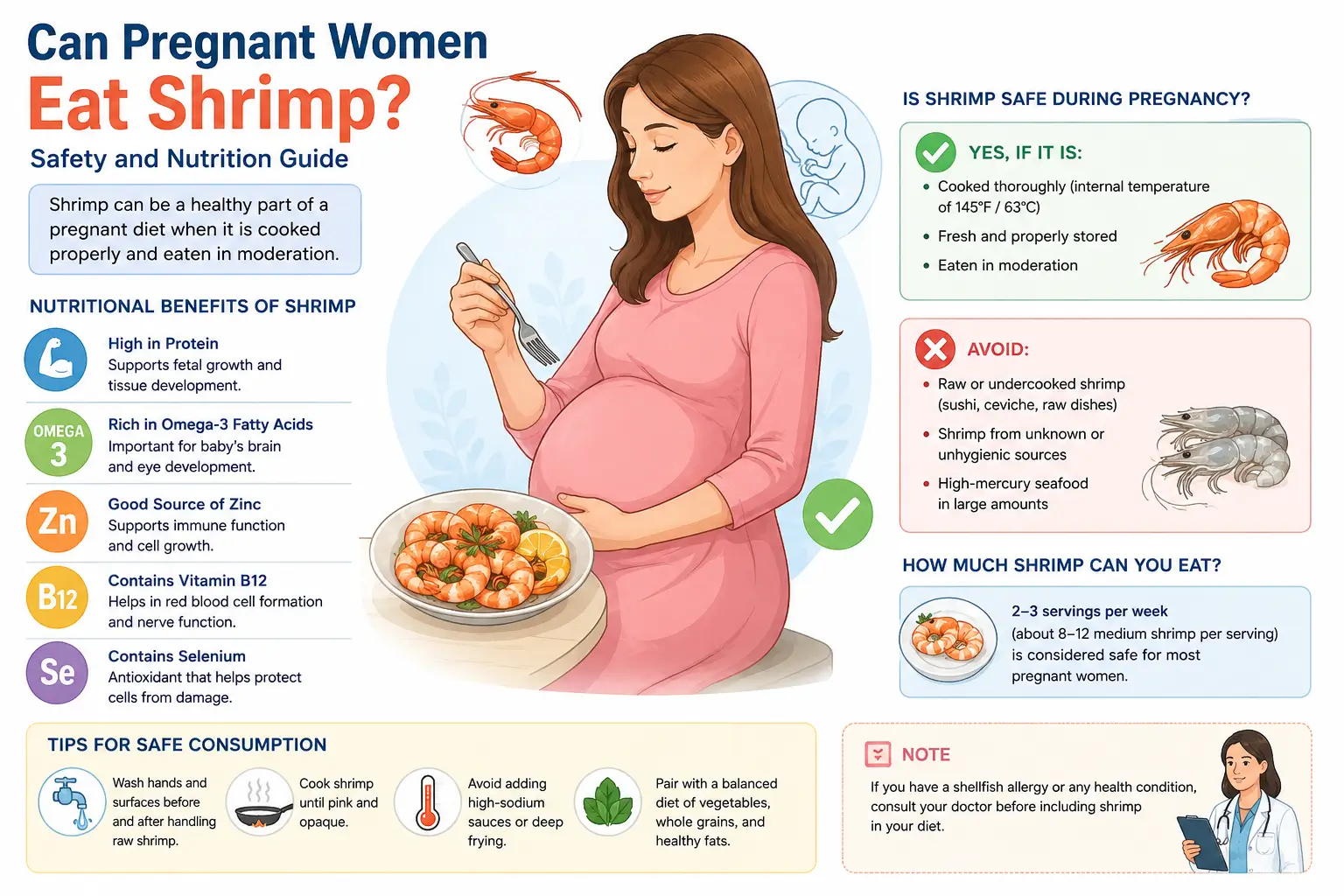
As you stand before the fish counter with cravings for garlic shrimp and an accompanying fear: is this actually safe for my baby? This question has become one of the top pregnancy food searches, as seafood contains both omega-3s and mercury warnings which often get mixed together into one piece.
Short answer is comforting: most major health authorities, like the Mayo Clinic and U.S. Food and Drug Administration (FDA), include shrimp on their lists of recommended seafood choices for expectant mothers. But “mostly” doesn’t equate with “anytime and any way,” meaning details regarding cooking method, portion size and source really do matter.
This guide explores why can pregnant women eat shrimp is generally supported in clinical guidelines, what nutrients make shrimp worth eating, where risks lie, and how much is considered safe per week. At its conclusion, you’ll have clear, source-backed answers that you can act upon immediately whether shopping at Karachi seafood stall or supermarket freezer aisle.
| Quick AnswerYes, pregnant women can safely consume shrimp. Both the FDA and EPA consider shrimp an “Best Choice” low-mercury seafood option and Dietary Guidelines for Americans recommend 8-12 ounces (2-3 servings) per week of low-mercury seafood like shrimp during gestation – provided it’s cooked through fully instead of being raw or underdone. |
Why This Question Comes Up So Often
Seafood advice during pregnancy has had an uncertain history. At first, mercury scare warnings led many expecting mothers to avoid fish and shellfish altogether based on overreaction rather than clear guidance from public health conditions. Overcorrection was later put forth with arguments against cutting out seafood entirely as missing vital nutrients that assist brain and eye development were lost as a result of doing so.
Shrimp sits right at the heart of this shift: inexpensive, widely available across Pakistan and much of the world, and quick to cook, which make it an everyday protein rather than an occasional treat. Understanding its place in pregnancy diet requires distinguishing real risks (undercooking/contamination risks) from overblown claims (e.g. mercury concerns which barely apply).
Simply stated, pregnant women eating shrimp is one of those questions for which the cautious instinct and clinical evidence do not align – with this guide being my aim to bridge that gap and bring clarity on this matter.
Shrimp Nutrition Facts: What You’re Actually Eating
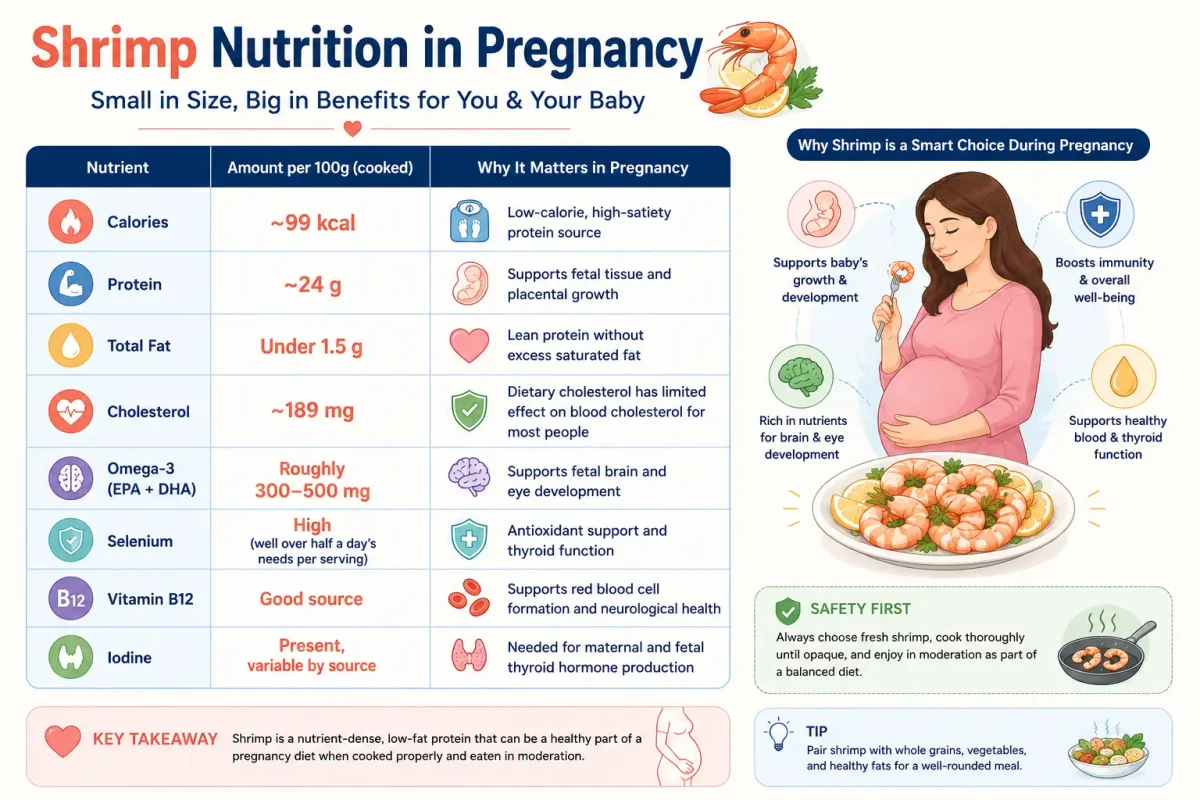
Before discussing safety, it’s helpful to understand why shrimp is featured on so many prenatal nutrition lists in the first place. A 100-gram serving of cooked shrimp provides remarkable nutrient density per calorie count.
| Nutrient | Amount per 100g (cooked) | Why It Matters in Pregnancy |
| Calories | ~99 kcal | Low-calorie, high-satiety protein source |
| Protein | ~24 g | Supports fetal tissue and placental growth |
| Total Fat | Under 1.5 g | Lean protein without excess saturated fat |
| Cholesterol | ~189 mg | Dietary cholesterol has limited effect on blood cholesterol for most people |
| Omega-3 (EPA + DHA) | Roughly 300–500 mg | Supports fetal brain and eye development |
| Selenium | High (well over half a day’s needs per serving) | Antioxidant support and thyroid function |
| Vitamin B12 | Good source | Supports red blood cell formation and neurological health |
| Iodine | Present, variable by source | Needed for maternal and fetal thyroid hormone production |
These figures come from USDA nutrition data and should be treated as estimates; exact values vary slightly based on species, farming method and cooking style. Even taking this into consideration, shrimp remains one of the highest protein and lowest-calorie animal foods on offer, making it a top recommendation among pregnancy nutrition guides for healthy pregnancies.
How Shrimp Compares to Other Common Proteins
| Food (100g, cooked) | Calories | Protein | Notable Nutrient |
| Shrimp | ~99 kcal | ~24 g | Selenium, EPA/DHA |
| Chicken breast | ~165 kcal | ~31 g | Niacin, B6 |
| Salmon | ~206 kcal | ~22 g | High omega-3 |
| Whole egg | ~155 kcal | ~13 g | Choline |
Shrimp stands up well when it comes to low calories, high protein levels and significant omega-3 content – factors which are especially appealing for mothers attempting to manage gestational diabetes or gain weight during gestation and searching for satisfying meals that contain minimal carbs.
The Real Concern: Mercury, and Why Shrimp Is Different
Mercury can make seafood advice during gestation more complicated than it has to be. Certain large, long-living predatory fish accumulate methylmercury over time in their tissue and high maternal exposure has been linked to neurological harm in developing babies; hence most seafood warnings.
Shrimp are short-lived crustaceans rather than larger predatory fish; therefore, their mercury accumulation tends to be very limited. That is precisely why the FDA and EPA’s joint seafood advice places shrimp amongst its “Best Choices”, along with salmon, pollock, catfish, tilapia and sardines; making regular consumption safe during pregnancy.
Seafood to Avoid vs. Seafood to Choose
| High-Mercury: Avoid | Low-Mercury: Best Choices |
| Shark | Shrimp |
| Swordfish | Salmon |
| King mackerel | Pollock |
| Tilefish (Gulf of Mexico) | Catfish |
| Bigeye tuna | Tilapia |
| Marlin | Sardines |
Albacore (white) tuna falls within the “Good Choices” category and should only be eaten up to 6 ounces weekly according to groups like the American College of Obstetricians and Gynecologists; shrimp is more permissive in this regard due to its lower mercury profile profile; this often leaves pregnant mothers confused when asked if eating shrimp during their gestation is safe; because shrimp does not come under this restriction it often poses as the answer when asked whether eating other types of seafood while expecting.
Nutrition counselors tend to answer this question more easily with shrimp than shark or swordfish; mercury calculation simply doesn’t compare.
The Precautions That Actually Matter
Mercury may not be the primary concern when it comes to shrimp consumption; foodborne illness should be. Pregnancy weakens immune defenses and leaves pregnant mothers more susceptible than usual to bacteria, viruses and parasites that would ordinarily pass unnoticed without complications; hence why pregnancy-specific guidelines exist when it comes to eating seafood such as shrimp.
1. Always Cook It Fully
Raw or undercooked shrimp is at risk of harboring Listeria, Vibrio bacteria or parasites which pose increased risks during gestation and should therefore not be consumed until post delivery has taken place. As such, sushi rolls, ceviche, shrimp cocktail prepared using undercooked shrimp as well as any “chilled raw” preparation should not be consumed until delivery has taken place.
- To achieve opaque and pearly white shrimp flesh, not translucent or grey hues, aim for an internal temperature of 145degF (63degC), the temperature recommended by both Mayo Clinic and U.S. food safety guidelines as an appropriate benchmark temperature when it comes to all seafood consumption.
- Fully cooked shrimp typically forms into tight “C” shapes; an underdone shrimp might display straightened edges instead. To prevent undercooking of precooked, refrigerator shrimp (like those sold ready-to-eat), heat until steamy hot before eating it.
2. Watch Preparation, Not Just the Shrimp Itself
One piece of perfectly safe shrimp could become risky depending on its environment or storage method; cross-contamination and improper holding temperatures cause more pregnancy-related seafood illness than its mercury content could ever do.
- Avoid shrimp that has been sitting out at room temperature, particularly in warmer regions like Pakistan during the summer season.
- When buying fresh shrimp for consumption at restaurants or markets, prioritize freshly cooked options over those from buffets or street stands which could have been chilled down and reheated multiple times before reaching you.
- To store raw shrimp properly and consume within one to two days or freeze immediately for later consumption, place in the coldest section of your refrigerator or store frozen.
- After handling raw shrimp, always wash hands, cutting boards, and utensils thoroughly to prevent cross-contaminating other foods.
3. Know Your Allergy History
Shellfish allergy is one of the more frequently experienced food allergies among adults, and pregnancy should not be used to assess it for the first time. If you already tolerate shrimp well before gestation begins, continuing eating it during your gestation won’t increase risk for an allergy in your baby; but if this is your first exposure or has run in your family history of allergy it would be prudent to consult your obstetrician prior to beginning to consume shellfish for whatever reasons.
How Much Shrimp Can You Eat While Pregnant?
Portion size can often lead to misguided advice; “eating seafood” does not equate with “eating unlimited seafood”. The Dietary Guidelines for Americans as well as FDA and EPA provide clear weekly limits for low mercury seafood consumption.
Step-by-Step: Building a Safe Weekly Shrimp Habit
1. Consume 8 to 12 ounces (about 224 to 336 grams) of low-mercury seafood per week, divided among two or three servings, roughly equivalent to three to four ounces or 85 to 115 grams — about the size of a deck of cards. optimiser
3. Combine seafood options such as salmon or pollock for greater nutrition diversity, rather than eating only shrimp, in order to obtain optimal nutrient balance.
4. Always cook to the temperatures and textures outlined here before serving.
5. If gestational diabetes or sodium restrictions are an important consideration for you, when selecting shrimp products try opting for freshly prepared and unsalted varieties as these often contain significantly more sodium than their processed or pre-brined versions.
Assuming you fall within this range is more about reaping its benefits than avoiding harm, with consistent, moderate seafood intake during gestation being associated with better outcomes in maternal-fetal nutrition research, likely because of its omega-3 and iodine-rich contents (especially that provided by shrimp and other seafood species).
Key Takeaways
• Can pregnant women eat shrimp? Yes — it’s FDA- and EPA-classified as a low-mercury “Best Choice” seafood, safe for regular consumption in pregnancy.
• The real risk isn’t mercury; it’s undercooking, cross-contamination, and improper storage.
• Cook shrimp to 145°F (63°C) until opaque and pearly white, never eat it raw or undercooked.
• Stick to 8–12 ounces of low-mercury seafood weekly, spread across 2–3 servings.
• Skip shrimp only if you have a diagnosed shellfish allergy, and check with your doctor if you’ve never eaten it before.
• Freshness and proper refrigeration matter even more in warm climates, including much of Pakistan.
Frequently Asked Questions
Can I consume shrimp during my first trimester of gestation?
Yes. Shrimp consumption during pregnancy doesn’t differ by trimester: just follow these three simple rules to eat safely: always ensure it has been fully cooked before eating it; stay within weekly seafood limits, and purchase from reliable vendors.
Does eating fried shrimp during gestation pose any risks to fetal development?
Fried shrimp is generally safe as long as it’s completely cooked through; however, due to its increased oil and caloric intake it should only be enjoyed occasionally, although counting as part of your weekly seafood consumption total.
Can I enjoy eating California roll or cooked shrimp sushi?
Sushi with fully cooked shrimp, like the California roll, is generally safe; the main risk lies with undercooked or raw seafood such as raw shrimp nigiri or sashimi.
What should I do if I accidentally consumed raw or undercooked shrimp?
One incident may not result in immediate health risks; however, be alert for signs of foodborne illness like fever, vomiting and diarrhea within days after exposure, since certain infections require prompt treatment during gestation. If such signs appear contact healthcare provider immediately to address potential infections that need prompt care during gestation.
Does frozen shrimp pose the same risks as fresh?
Yes, freezing shrimp can be safer since you gain greater control of storage time and thawing conditions. Thaw it in the refrigerator rather than at room temperature before proceeding with preparation and cooking thoroughly.
Can eating shrimp cause miscarriage?
There’s no evidence to indicate that properly cooked, low-mercury shrimp causes miscarriage during gestation. Any seafood-related risks arise due to high mercury fish species or undercooked or contaminated shellfish — not shrimp consumed according to standard guidelines.
Do shrimp help ease nausea or morning sickness symptoms?
Some women find mild-flavored shrimp easier to tolerate during periods of nausea than red meat; this will depend on each person. To reduce smell sensitivity issues when cooking it outdoors or selecting mild preparation methods could help.
Can pregnant women eat shrimp every day while expecting?
Health guidelines suggest pregnant women consume shrimp on an as-needed basis; rather than eating shrimp daily during gestation, health experts advocate eating it once or twice every week instead. Instead of loading up on shrimp daily for consumption purposes alone, try rotating low mercury seafood such as shrimp with low mercury seafood options to meet 2-3 weekly serving requirements instead.
The Bottom Line
According to guidance provided by the FDA, EPA, Mayo Clinic, and Dietary Guidelines for Americans, pregnant women may consume shrimp when fully cooked from an excellent and reliable supplier within their recommended 8 to 12 ounce weekly limit of low mercury seafood consumption. It provides invaluable protein along with essential selenium, iodine and omega-3 benefits at relatively few calories.
Next time the urge strikes for shrimp, don’t talk yourself out of it – cook thoroughly, watch portion sizes carefully and indulge with pride! If you have special dietary or health considerations (shellfish allergies/pregnancy complications etc) consult your obstetrician for advice so your meal fits within their care plan.
Read up on My Health Chart’s relevant reads regarding prenatal nutrition to gain more guidance, such as food-grade fish options, what not to eat during gestation and creating a balanced prenatal diet plan.
Sources and Further Reading
• Mayo Clinic — Pregnancy and fish: What’s safe to eat?
• U.S. EPA & FDA — Advice about Eating Fish and Shellfish
• Mayo Clinic — Pregnancy nutrition: Foods to avoid during pregnancy
• Medical News Today — Shrimp during pregnancy: Safety, benefits & precautions
• USDA FoodData Central — Nutrient database for shrimp and shellfish
• Frontiers in Sustainable Food Systems — Biochemical composition of Pakistan’s indigenous shellfish species (Karachi Fish Harbor study)
This article is for general educational purposes and does not replace personalized medical advice. Always consult your obstetrician or a registered dietitian about your individual pregnancy nutrition needs.
Dr. Ashlee O’Shell, MD, FACOG is an obstetrician-gynecologist based in Bloomfield Hills, Michigan. She provides personalized women’s healthcare across different stages of life, with a particular focus on OB/GYN care and menopause health. She is also involved in medical advisory work and promotes individualized, patient-centered approaches to women’s wellness.