
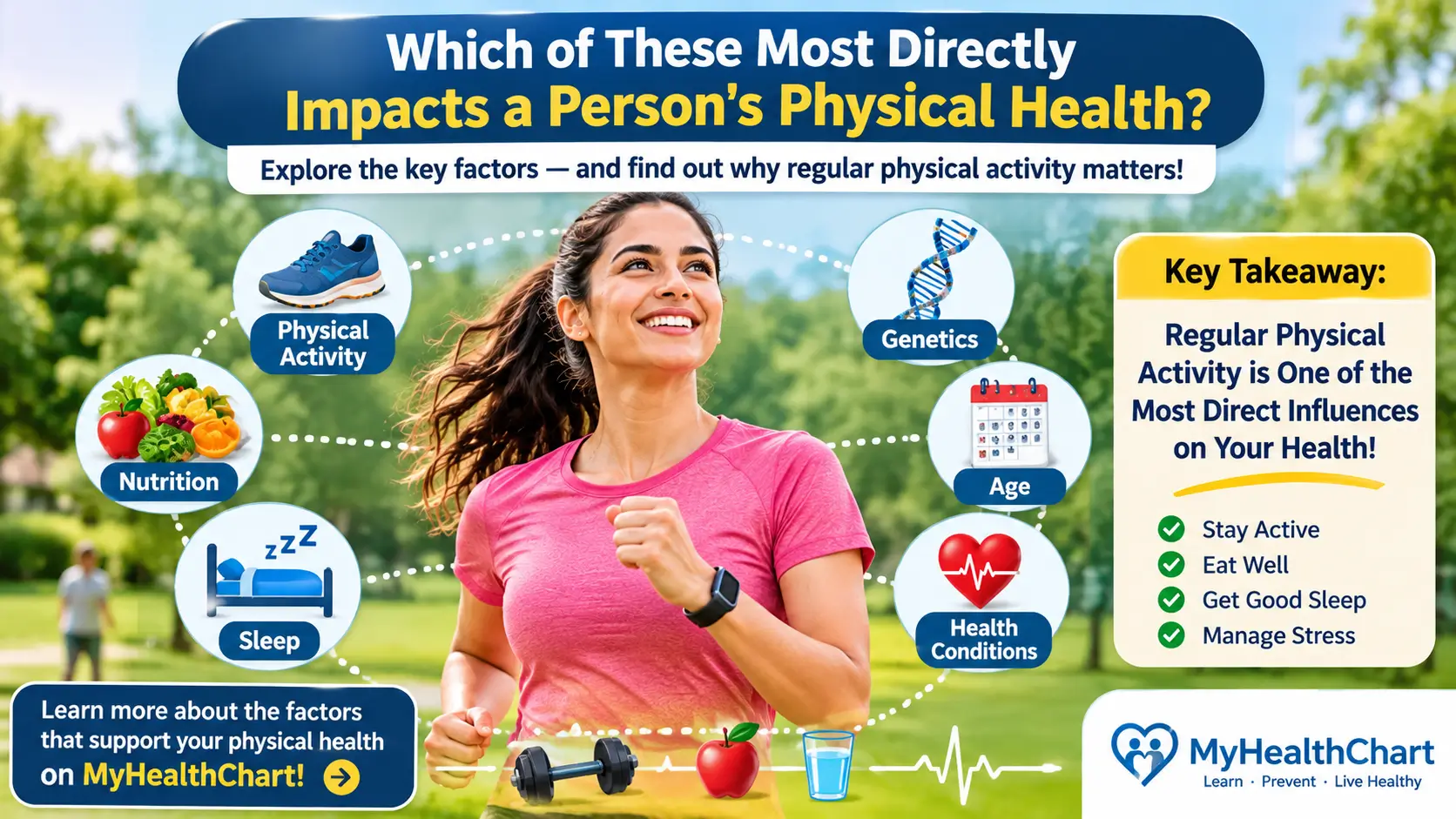
Physical health is influenced by several factors, but regular physical activity is one of the most direct and important influences on how the body functions. Moving regularly supports the heart, lungs, muscles, bones, coordination, and everyday physical abilities.
However, physical activity is not the only factor that matters. Nutrition, sleep, genetics, age, existing health conditions, and the surrounding environment also influence a person’s health.
Understanding these factors can help people make informed choices about their everyday well-being. This guide explains which factor has a particularly direct impact on physical health, how other factors contribute, and how they work together.
Quick Answer: What Most Directly Impacts a Person’s Physical Health?
Regular physical activity is one of the most direct influences on physical health because it helps maintain cardiovascular fitness, muscle function, bone strength, mobility, and overall physical capacity.
Nevertheless, physical health does not depend on one habit alone. A balanced eating pattern, adequate sleep, access to healthcare, genetics, and environmental conditions also play important roles.
The Centers for Disease Control and Prevention (CDC) explains that regular physical activity supports heart health, improves sleep, strengthens bones, and reduces the risk of several chronic health conditions.
1. Physical Activity: A Major Influence on Physical Health
Physical activity includes everyday movement such as walking, cycling, dancing, playing sports, and other activities that use the body’s muscles.
Regular movement helps the body perform everyday tasks and supports several important functions.
How Physical Activity Supports the Body
- Heart health: Movement helps improve cardiovascular fitness and supports healthy circulation.
- Muscle function: Activities that use muscles help develop and maintain strength.
- Bone health: Weight-bearing activities can support stronger bones.
- Mobility: Regular movement helps maintain coordination, flexibility, and physical function.
- Sleep: Physical activity can improve sleep quality.
- Long-term health: Regular activity is associated with a lower risk of several chronic conditions.
According to the CDC, physical activity can also help lower blood pressure and reduce the risk of heart disease, stroke, and type 2 diabetes.
Read more about the health benefits of physical activity.
Everyday Examples of Physical Activity
Physical activity does not always require a gym or specialized equipment. Walking, recreational cycling, active games, dancing, and outdoor activities can all contribute to an active lifestyle.
For children and adolescents, regular age-appropriate movement supports healthy growth, muscular fitness, bone health, and overall development.
Explore more information in MyHealthChart’s Fitness and Exercise category.
2. Nutrition: Providing the Body With Essential Nutrients
Nutrition is another major influence on physical health. The body needs a variety of nutrients to support growth, energy production, tissue maintenance, and normal biological functions.
A balanced eating pattern can include:
- Fruits and vegetables
- Whole grains
- Protein-rich foods
- Dairy products or suitable alternatives
- Healthy sources of fats
- Adequate water
Different nutrients have different roles. Protein supports the maintenance and repair of body tissues, carbohydrates provide an important energy source, and dietary fats help the body absorb certain vitamins.
Vitamins and minerals also contribute to normal functions such as bone development, immune function, and energy metabolism.
For more information, explore the Nutrition and Diet category.
3. Sleep: Supporting Recovery and Normal Body Functions
Sleep is essential for physical and mental well-being. During sleep, the body carries out important processes involved in recovery, development, memory, and normal regulation.
Insufficient or poor-quality sleep can affect:
- Concentration and attention
- Energy levels
- Mood and emotional regulation
- Physical recovery
- Immune function
- Daily performance
Sleep needs vary with age. Children and teenagers generally need more sleep than adults because their bodies and brains are still developing.
Maintaining a consistent sleep routine and creating a comfortable sleeping environment can support better sleep habits.
4. Genetics: The Role of Inherited Characteristics
Genetics can influence several aspects of physical health. People inherit biological characteristics from their parents, and these characteristics may affect how their bodies develop and function.
Genetic factors can influence:
- Natural differences in physical characteristics
- Certain inherited health conditions
- Individual responses to physical activity
- Some aspects of metabolism
- Predisposition to particular health risks
However, genetics do not determine every aspect of a person’s health. Daily habits, environmental conditions, healthcare access, and other influences also matter.
5. Age and Physical Development
Age affects the body’s development and physical needs throughout life.
During childhood and adolescence, the body undergoes important changes involving bones, muscles, coordination, and growth. In adulthood, maintaining physical function becomes important for everyday activities and long-term health.
As people grow older, some physical abilities may change. Regular movement, balanced nutrition, adequate sleep, and appropriate healthcare can help support physical function across different stages of life.
6. Existing Health Conditions and Access to Healthcare
A person’s health history can influence physical abilities, energy levels, and daily activities.
Some conditions affect the heart, lungs, muscles, joints, metabolism, or other body systems. Their effects vary depending on the individual and the nature of the condition.
Access to appropriate healthcare also matters. Routine checkups, preventive care, and professional guidance can help people understand health concerns and make informed decisions.
People should not interpret an individual health measurement as a diagnosis without considering their full health situation.
7. Environment and Daily Living Conditions
The environment can influence how easily people maintain healthy routines.
Important environmental factors include:
- Access to safe places for outdoor activities
- Availability of nutritious food
- Air and water quality
- Housing and living conditions
- Access to healthcare services
- School, work, and community environments
For example, someone who has access to safe parks and walking areas may find it easier to include outdoor movement in their routine.
These conditions show why physical health is influenced by more than individual choices alone.
Comparison: Which Factors Affect Physical Health?
| Factor | How It Influences Physical Health |
|---|---|
| Physical activity | Supports heart, muscle, bone, and overall physical function |
| Nutrition | Supplies nutrients needed for growth and normal body functions |
| Sleep | Supports recovery, development, and daily functioning |
| Genetics | Influences inherited characteristics and certain health risks |
| Age | Changes physical development and health needs |
| Health conditions | May affect body functions and physical abilities |
| Environment | Influences access to healthy food, movement, and healthcare |
No single factor explains every person’s physical health. These influences interact, and their importance can vary from one individual to another.
How Can Someone Support Better Physical Health?
Healthy routines should be realistic, balanced, and appropriate for a person’s age and circumstances.
Some useful habits include:
- Stay physically active: Include enjoyable movement in everyday life.
- Eat a varied diet: Choose different foods that provide essential nutrients.
- Get adequate sleep: Follow a regular sleep routine based on age-related needs.
- Stay hydrated: Drink water regularly and adjust fluid intake to individual needs.
- Attend appropriate health checkups: Discuss health concerns with a qualified healthcare professional.
- Spend time in supportive environments: Look for safe opportunities for movement and recreation.
- Maintain consistency: Sustainable everyday habits are more useful than extreme or short-term routines.
For additional educational information, visit MyHealthChart’s Wellness and Health Guides.
MyHealthChart Tools That Can Help You Understand Health Measurements
Health measurements can provide useful information, but they should always be interpreted in the right context. MyHealthChart offers educational resources that explain some common measurements and help readers organize information.
Here are two relevant resources:
Blood Pressure Chart
The MyHealthChart Blood Pressure Chart explains common blood pressure categories and provides general educational information about systolic and diastolic readings.
A single reading cannot establish a diagnosis. Personal interpretation should come from a qualified healthcare professional.
My Chart and Health Tracker
The My Chart and Health Tracker allows users to organize measurements they have recorded elsewhere and keep track of everyday habits.
It is an educational, session-based tool. It does not measure vital signs, provide a permanent medical record, or diagnose health conditions.
These tools are intended to support general health education, not replace professional assessment.
Common Questions About Factors Affecting Physical Health
1. Which factor most directly impacts a person’s physical health?
Regular physical activity is one of the most direct influences on physical health because it supports cardiovascular fitness, muscle function, bone strength, and mobility. Nutrition, sleep, genetics, and other factors also contribute.
2. Does exercise improve overall physical health?
Yes. Regular, age-appropriate physical activity supports heart and lung function, muscle strength, bone health, coordination, and sleep. Its benefits vary depending on a person’s age, health, and activity level.
3. Can nutrition affect physical health?
Yes. Nutrition supplies the energy and nutrients the body needs for growth, tissue maintenance, and normal biological functions. A varied and balanced eating pattern supports general health.
4. How does sleep influence physical health?
Sleep supports physical recovery, development, immune function, and normal daily functioning. Consistently getting enough sleep is an important part of maintaining health.
5. Do genetics determine a person’s physical health?
No. Genetics can influence inherited characteristics and certain health risks, but physical health is also affected by lifestyle, environment, healthcare access, and other factors.
6. Can environmental conditions affect physical health?
Yes. Air quality, food availability, safe places for physical activity, housing, and access to healthcare can all influence health and everyday well-being.
7. Can a health calculator determine whether someone is physically healthy?
No. A calculator can explain or estimate a particular measurement, but it cannot evaluate a person’s complete health. Individual health concerns should be discussed with a qualified healthcare professional.
Conclusion
Regular physical activity is one of the most direct influences on a person’s physical health because it supports several important body functions, including cardiovascular fitness, muscular strength, mobility, and bone health.
However, good physical health depends on a combination of influences. Nutrition, sleep, genetics, age, existing health conditions, and environmental circumstances all contribute.
The most useful approach is to develop balanced, sustainable habits while recognizing that every person’s health needs are different. MyHealthChart provides educational guides and tools to help readers understand common health topics and measurements.
Medical Disclaimer: This article is for general educational purposes only. It does not provide personal medical advice, diagnosis, or treatment. Consult a qualified healthcare professional about individual health concerns.
References
- Centers for Disease Control and Prevention (CDC): Benefits of Physical Activity
- CDC: Health Benefits of Physical Activity for Children
- World Health Organization (WHO): Physical Activity

Paulina Luna, M.D., is a PGY-2 Neurology Resident and medical doctor from Mexico. Her content focuses on medicine, lifestyle, and her experiences building a life and career in the United States.