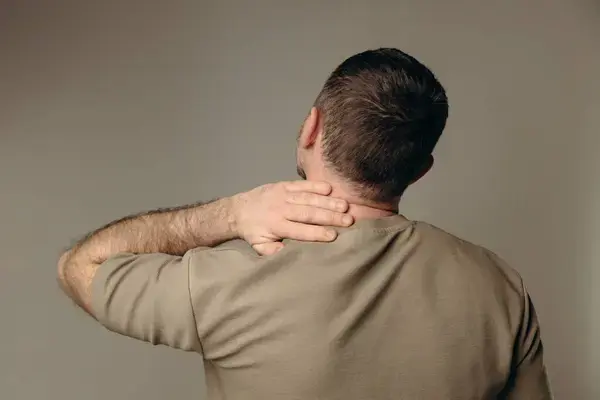
Quick answer: Pain on the left side of the upper back is most commonly caused by muscle strain, poor posture, or a pinched nerve. Less commonly, it can be linked to issues with the heart, lungs, or kidneys. Most cases improve with rest, stretching, and over-the-counter pain relief within a few days. Seek emergency care if the pain is sudden and severe, spreads to your chest, jaw, or arm, or comes with shortness of breath, sweating, or dizziness.
Common (Usually Harmless) Causes
1. Muscle Strain
Overuse, heavy lifting, or sudden awkward movements can strain the muscles between the shoulder blades and spine, causing a dull ache or sharp twinge on one side.
2. Poor Posture
Hunching over a desk, phone, or steering wheel for long periods puts uneven strain on the upper back and shoulder muscles, often worsening throughout the day.
3. Pinched Nerve or Herniated Disc
A nerve compressed in the neck or upper spine can cause pain that radiates into the upper back, sometimes with tingling or numbness down the arm.
4. Muscle Spasm
Stress, dehydration, or sudden movement can trigger an involuntary muscle spasm, producing a tight, knot-like pain that limits movement.
5. Poor Sleeping Position
An unsupportive mattress or sleeping in an awkward position can leave the upper back sore and stiff in the morning.
6. Trauma or Injury
A fall, sports injury, or car accident can bruise or strain the muscles and ligaments of the upper back, sometimes without obvious bruising.
Less Common but Important Causes
7. Lung Issues
Conditions like pleurisy (inflammation of the lung lining) or pneumonia can cause sharp upper back pain that worsens with deep breaths or coughing.
8. Heart-Related Pain
While chest pain is the classic heart attack symptom, some people — especially women — experience referred pain in the upper back, shoulder, or jaw instead of (or along with) chest discomfort.
9. Kidney Problems
Kidney issues typically cause pain lower and more to the side (flank), but in some cases discomfort can be felt higher on the back, especially with a kidney infection or stone.
10. Gallbladder Issues
Though gallbladder pain is usually felt on the right side, in some people referred pain can be felt more centrally or toward the upper back.
Red Flag Symptoms — Seek Emergency Care
Call emergency services or go to the ER if upper left back pain occurs with:
- Chest pain, pressure, or tightness
- Pain spreading to the jaw, neck, or left arm
- Shortness of breath
- Sudden sweating, nausea, or lightheadedness
- Pain that started suddenly and is severe
These can be signs of a heart attack and require immediate evaluation — don’t wait to see if it passes.
When to See a Doctor (Non-Emergency)
Book an appointment if the pain:
- Lasts longer than 1–2 weeks
- Worsens with deep breathing or coughing
- Comes with fever
- Is accompanied by numbness, tingling, or weakness in the arm
- Follows a fall or injury
Self-Care Tips for Muscle-Related Back Pain
- Apply ice for the first 48 hours, then switch to heat to relax tight muscles
- Gently stretch the shoulders and upper back
- Take over-the-counter pain relief (e.g., ibuprofen or acetaminophen) as directed
- Improve posture, especially during desk work
- Avoid heavy lifting until the pain resolves
Frequently Asked Questions
Can anxiety cause upper left back pain? Yes. Anxiety and stress often cause muscle tension in the shoulders and upper back, which can present as a dull, persistent ache.
Is upper left back pain always a heart problem? No. Most cases are due to muscle strain or posture issues. Heart-related pain is usually accompanied by other symptoms like chest pressure, shortness of breath, or pain radiating to the arm or jaw.
How long does muscle-related back pain usually last? Mild muscle strain typically improves within a few days to two weeks with rest and self-care. Pain lasting longer should be evaluated by a doctor.
Why does my upper back hurt when I breathe deeply? Pain that worsens with deep breaths or coughing can point to a lung-related cause, such as pleurisy, and should be checked by a doctor, especially if accompanied by fever or cough.
This article is for educational purposes only and is not a substitute for professional medical advice. If you experience sudden, severe back pain with chest pain, shortness of breath, or other warning signs, seek emergency medical care immediately.